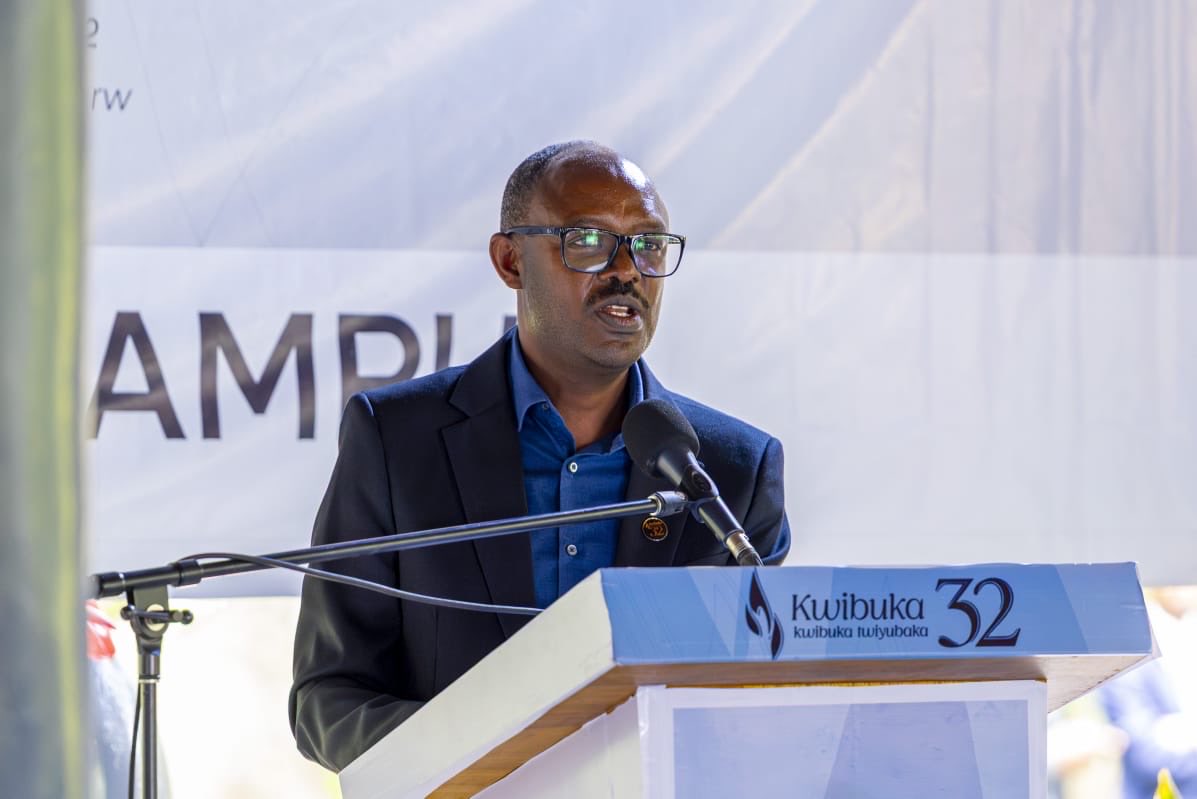
The chairperson of Ibuka, Dr Philibert Gakunzire, has called on Rwandans to collectively take responsibility for understanding and preserving the country’s history, saying it should guide the future rather than weigh people down.
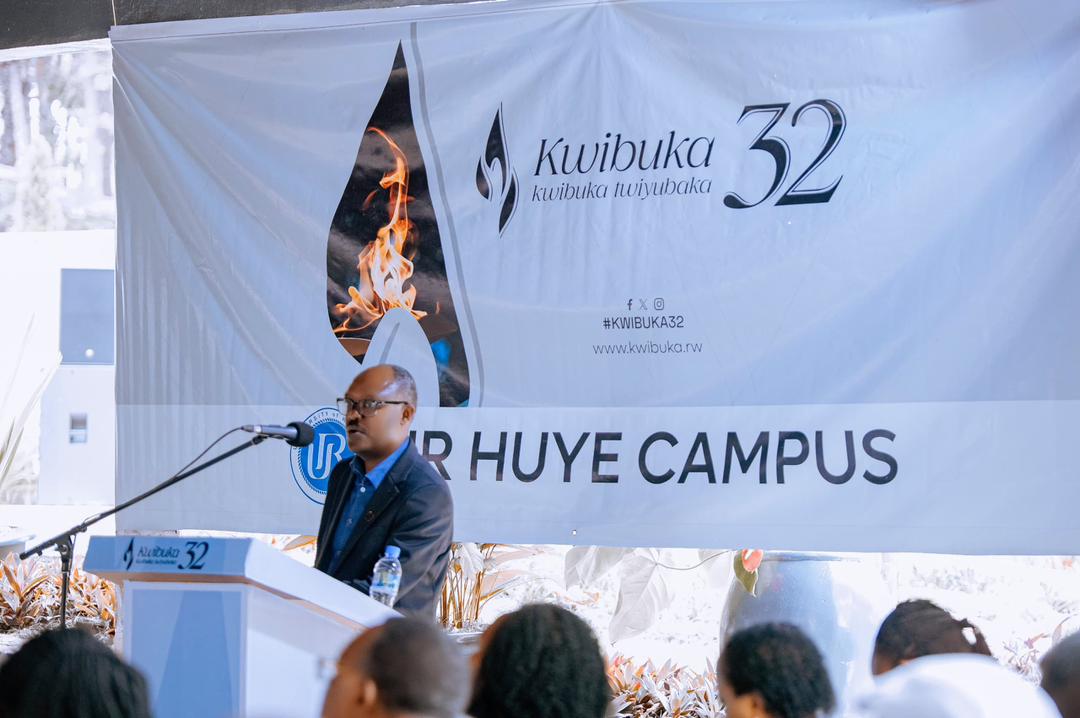
Speaking during the commemoration of the 1994 Genocide against the Tutsi at the University of Rwanda on April 22, Gakunzire emphasised that while Rwanda’s past is painful, it should not be seen as a burden.
He noted that although Rwanda has a long history, a specific period was marked by targeted persecution against the Tutsi that culminated in the genocide.
Gakunzire drew parallels with other historical atrocities, including the Holocaust and the Armenian genocide, noting that even decades later, such events still feel recent.
He described Rwanda’s history as a “heavy burden” that can be carried more easily when shared collectively, arguing that when everyone contributes, no individual is left to bear more weight than others.
According to him, efforts to ease this burden in Rwanda have included deliberate decisions by the government to promote unity and fight ethnic division. He highlighted the role of the Rwandan Patriotic Front in shaping a country governed by laws, drawing comparisons with post-World War II Germany, where leadership took decisive steps to confront the past.
Gakunzire stressed that understanding the history of the 1994 Genocide against the Tutsi is a shared responsibility for all Rwandans, not a section of society, adding that this message must be passed on to the youth.
“History should help change behaviour and prevent the repetition of past tragedies,” he said, citing President Paul Kagame, who has emphasised that while the past cannot be changed, the future can be shaped.
He added that history should act as a guide for the future, rather than something that traps people in the past.
Gakunzire also underscored the importance of testimonies, noting that while survivors may have questions that remain unanswered, sharing experiences helps shape collective understanding and behaviour. He said testimonies are vital in documenting and preserving history.
He urged Rwandans not to grow weary of commemoration activities, describing them as essential in building a shared identity and reinforcing responsibility.
He said that revisiting history helps Rwandans understand where they come from, where they are, and where they are headed, stressing the need to reflect on all historical periods, including before, during, and after colonisation.
Ineza umutoni Nadia / The Kaminuza Star