
The Minister of Foreign Affairs and International Cooperation, Olivier Nduhungirehe, has warned that the continued spread of genocide ideology and global inaction risk repeating past tragedies, calling for collective responsibility to confront hate and denial.
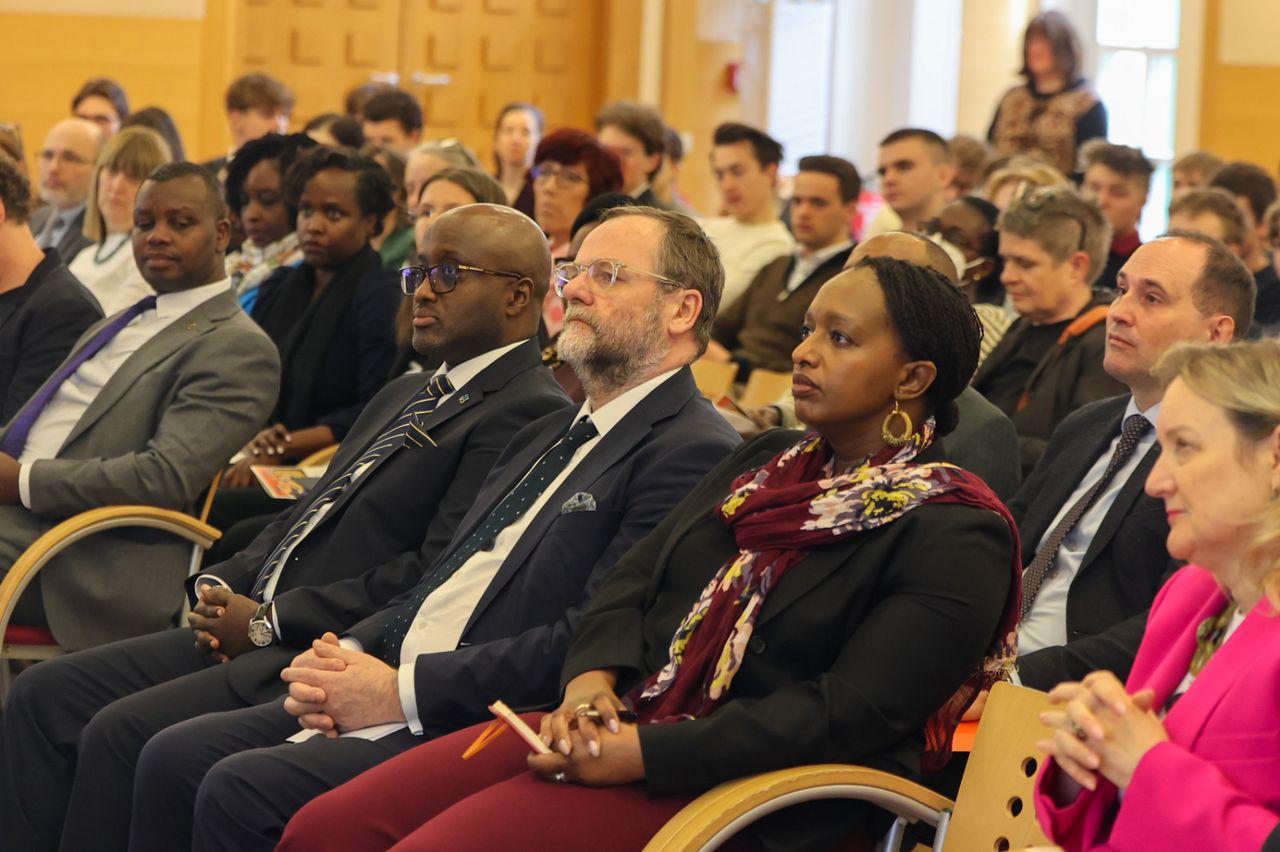
He was speaking at the International Conference on “Learning from the Past, Shaping the Future” held at the Vienna School of Diplomacy on March 23, where discussions focused on remembrance, reconciliation, and reintegration in the context of the 1994 Genocide against the Tutsi.
“We are living in a time when genocide ideology, denial, and distortion are not only persisting, but evolving,” Nduhungirehe said. “They are spreading across borders with alarming speed, amplified by digital platforms and emerging technologies, including artificial intelligence.”
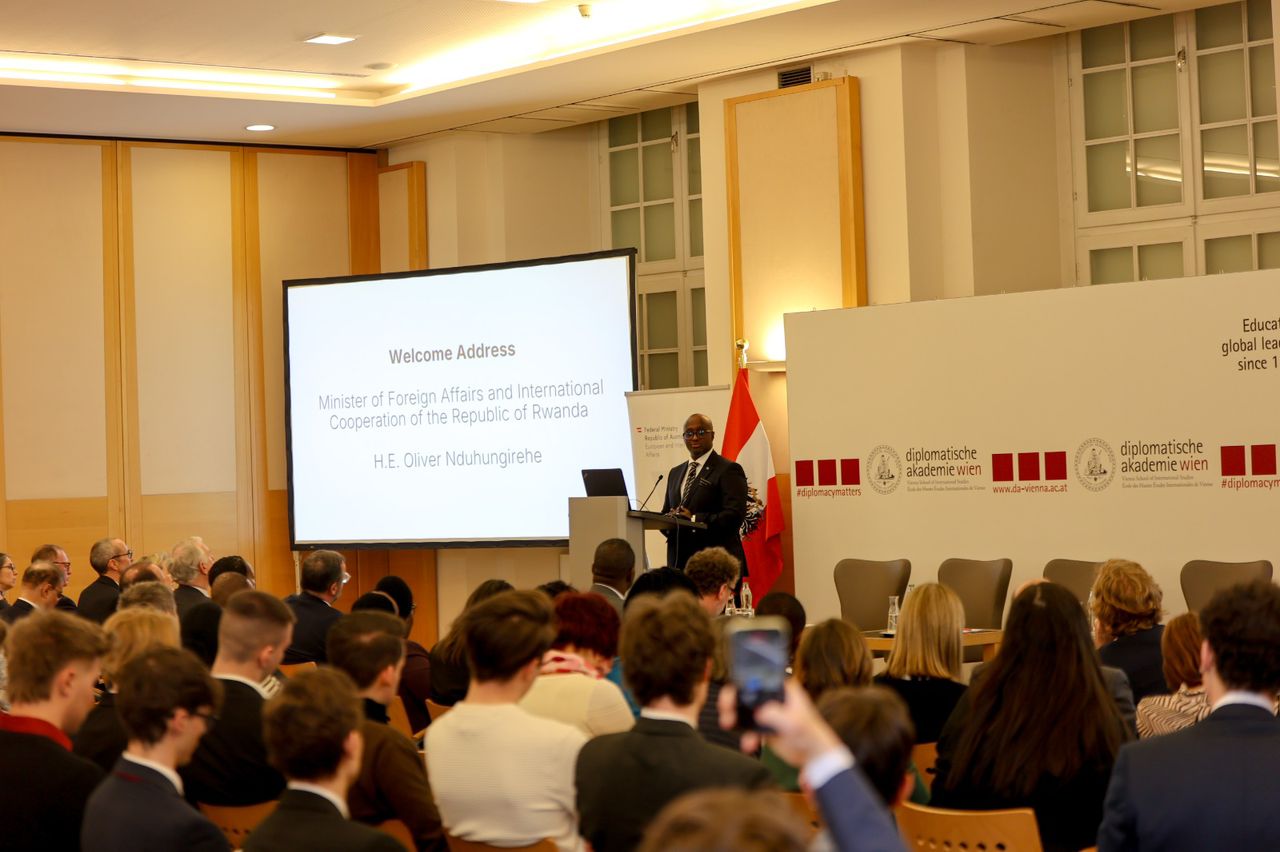
He cautioned that while such technologies hold great potential, they are increasingly being misused to manipulate narratives, fuel division, and obscure the truth.
The minister stressed that genocide is never a spontaneous act of violence but a deliberate and systematic process.
“Almost 32 years ago, the 1994 Genocide against the Tutsi in Rwanda took place. It was carefully orchestrated over decades,” he said, noting that more than one million people were killed in just 100 days.
Nduhungirehe also reflected on Rwanda’s recovery journey, saying the country chose unity, reconciliation, and nation-building in the aftermath of the genocide.
“Our leaders, together with the people, chose reconciliation and nation-building,” he said, highlighting key measures such as the abolition of ethnic identity cards, the integration of former combatants into a unified national army, and inclusive national dialogue processes.
He pointed to the revival of the Gacaca courts as a critical homegrown solution to deliver justice and promote healing.
“More than two million cases were tried. Perpetrators confessed, survivors shared their experiences, and communities began to heal,” he noted.
The minister warned that the drivers of genocide have not disappeared, citing ongoing insecurity in eastern Democratic Republic of the Congo, where extremist ideologies targeting Tutsi communities continue to fuel violence, persecution, and displacement.
“We must be clear: silence in the face of such warning signs is complicity,” he said. “We have seen before where denial and indifference can lead. We cannot afford, as an international community, to repeat the mistakes of 1994.”
He also noted that genocide denial and distortion are gaining ground globally, including in some Western countries, calling for stronger legal frameworks, better education, and greater accountability to counter the trend.
Nduhungirehe stressed that the responsibility to prevent genocide rests with everyone.
“‘Never Again’ is not merely a slogan. It is a responsibility that rests with all of us, every day, across the world,” he said.
The Kaminuza Star / Pichou Byiringiro