


KIGALI – The President of the Rwanda Journalism Educators Network (RJEN), Rev. Jean Pierre Uwimana, has said that in the modern digital era, a lecturer or researcher who lacks skills in using Artificial Intelligence (AI) is effectively no different from someone who cannot read or write.
He made the remarks during a three-day workshop for journalism and communication lecturers from various universities, aimed at strengthening their capacity to use Artificial Intelligence in research and teaching.
The training, held at the University of Rwanda’s Gikondo Campus, brought together 20 participants from University of Rwanda (UR), East African University of Rwanda, Institut Catholique de Kabgayi (ICK), and Mount Kigali University, all members of RJEN.
“In this era of rapid technological advancement, failing to understand and use AI is like being illiterate,” Rev. Uwimana said. “Anyone who cannot use AI today is not keeping pace with modern research practices or aware of what others are writing.”

The training was organized by the Rwanda Journalism Educators Network (RJEN), in collaboration with the Fojo – Rwanda Media Programme (RMP). It focused on the use of Artificial Intelligence and visual design as teaching tools, with the aim of strengthening lecturers’ ability to integrate modern technology into their teaching and help students keep pace with the fast-changing digital media environment.
Beyond skills development, the program also sought to increase academic research output among journalism educators.
Rev. Uwimana explained that participants would work in clusters to produce up to 20 research papers, noting that collaborative research helps lecturers earn more points toward academic promotion and is more manageable than individual efforts.
“When you publish alone, according to existing regulations, you may earn only one point,” he said. “But if you produce five papers as a group and each member signs them, you can earn four or five points.”
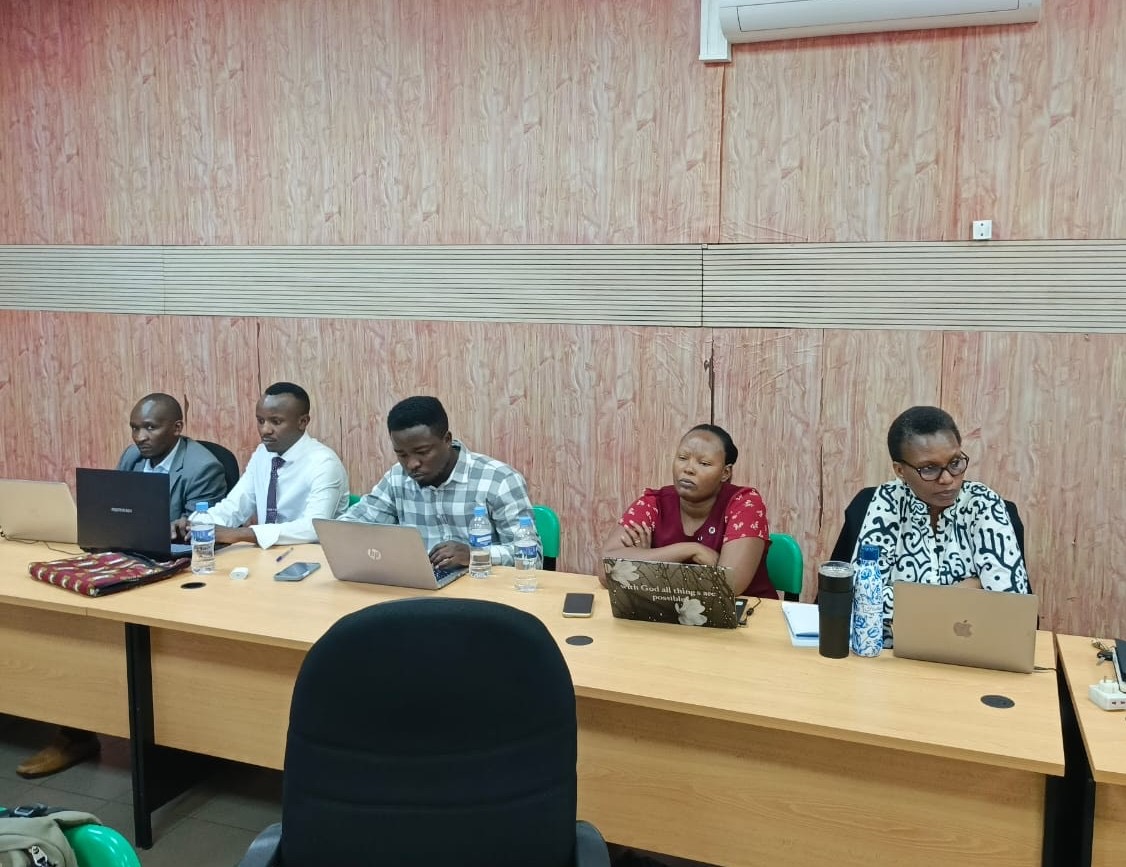
One of the participants, Josue Kwihangana from the Institut Catholique de Kabgayi (ICK), said the training significantly enhanced his knowledge and broadened his understanding of AI tools.
“The three-day training opened my eyes to the use of AI,” he said. “I was familiar with ChatGPT, but we also learned about other tools such as Gemini, Google AI, Claude, and many more that I did not know before.”
Kwihangana added that learning how to conduct academic referencing using AI was particularly valuable, as it will simplify his work and that of his students in writing and editing academic materials.
He pledged to share the knowledge with his students, saying AI-based referencing will help them work faster and more efficiently.
Prudence KWIZERA / The Kaminuza Star