Rwanda’s National Unity and Reconciliation Barometer has risen to 95.3 percent, reflecting continued progress in strengthening unity, reconciliation, and resilience across the country, according to a new report by the Ministry of National Unity and Civic Engagement (MINUBUMWE).
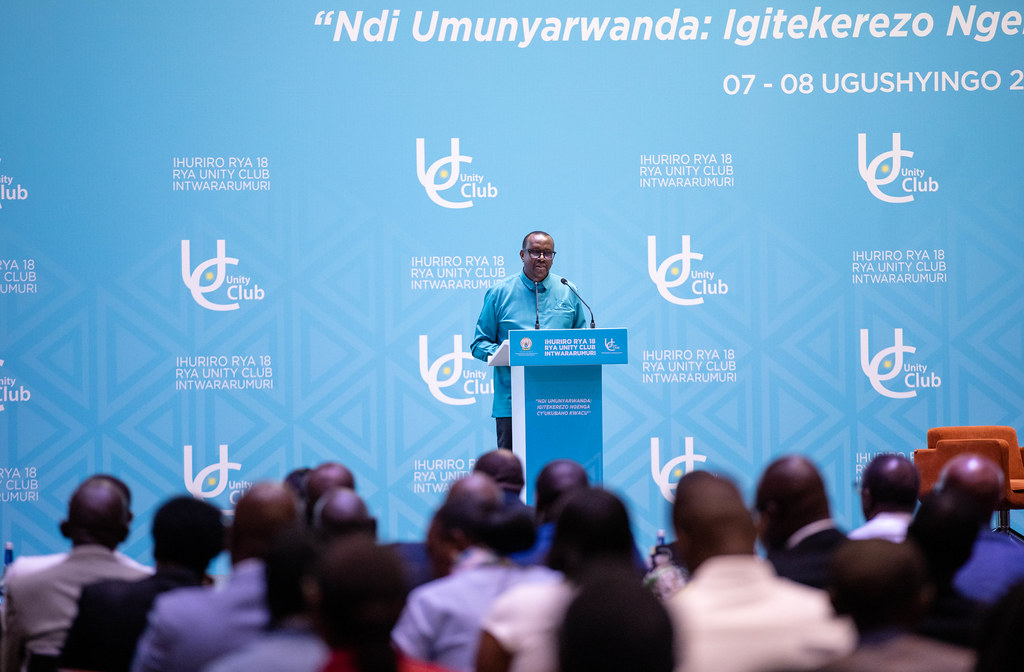
The findings were presented during the 18th Annual Unity Club Intwararumuri Forum held on Saturday, November 8, at the Intare Conference Arena.
Minister Jean Damascène Bizimana said the upward trend highlights Rwanda’s growing social cohesion and collective resilience since 2010, when the index stood at 82.3 percent.
“The state of unity and reconciliation in Rwanda is at a commendable level,” Bizimana said. “The barometer has shown steady improvement, from 82.3 percent in 2010 to 92.5 percent in 2015, and now 95.3 percent in 2025.”
Compared to the 94.7 percent recorded in 2020, the 2025 results mark a 0.6 percent increase, showing sustained gains in national healing and trust.
Bizimana explained that the barometer remains an important policy tool for measuring the state of unity, reconciliation, and resilience while identifying emerging threats and recommending new solutions.
“Unity and Reconciliation remain the main pillars because they are connected to the social relationships, shared history, and collective efforts Rwandans have invested in rebuilding themselves after the Genocide against the Tutsi,” he said. “Resilience was added because it is the foundation upon which unity and reconciliation are built.”
For the first time, the 2025 edition of the barometer was structured around three key pillars — Unity, Reconciliation, and Resilience — reflecting the interconnected nature of Rwanda’s post-Genocide recovery.
The nationwide study surveyed 12,300 people from different sectors, age groups, and religious backgrounds.
It found that Unity scored 95.6%, Reconciliation 95%, and Heroism and Patriotism 98.7%. Rwandan Traditions, Beliefs, and Taboos were rated at 97.9%, while Shared Ancestry reached 96.8%.
The role of Rwandan values in preserving unity stood at 95.9%, and the importance of Genocide commemoration in building reconciliation reached a near-perfect 99%.
Other indicators showed Social cohesion at 98.5%, Equal rights at 92%, and Shared understanding of history and a common vision for the future at 90.6%.
Despite the steady progress, the report points to lingering challenges that threaten Rwanda’s unity and reconciliation journey.
Among respondents, 23 percent said Genocide ideology still exists in their communities, while 38 percent noted that some individuals continue to hold discriminatory beliefs.
The study also found that 45.1 percent of participants believe that wounds from the 1994 Genocide against the Tutsi remain unhealed among survivors.
Bizimana said the persistence of such attitudes highlights the need for continuous education, dialogue, and vigilance, particularly in light of misinformation spread on digital platforms.
“Platforms are operating from outside Rwanda that continue to twist facts and undermine the country’s unity and progress,” he warned.
To address these challenges, the report outlines nine recommendations aimed at strengthening unity and resilience. These include promoting Rwandan values and culture among the youth by teaching Kinyarwanda and national history, encouraging youth participation in family and community unity initiatives, and investing in open local dialogues that allow honest conversations about Rwanda’s past and lessons for the future.
Bizimana said that Rwanda’s steady progress is the result of deliberate leadership and inclusive policies that promote equality, justice, and national identity.
“The progress we see today is the result of deliberate policies that bring Rwandans together,” he said. “But there is still work to do to ensure that no remnants of division or discrimination are allowed to take root again.”