


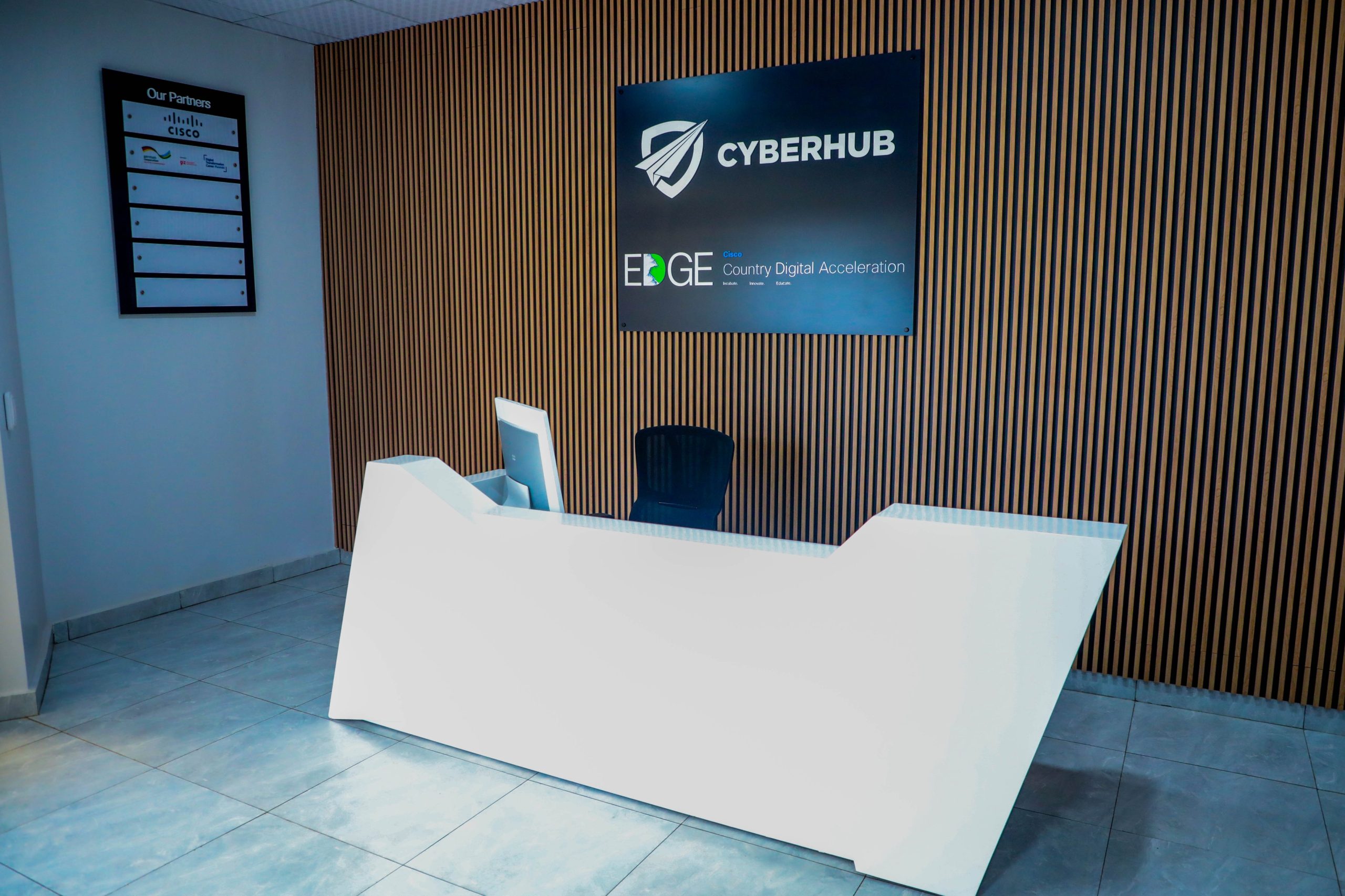
The University of Rwanda’s College of Science and Technology is now home to the country’s first CyberHub, a national centre of excellence in cybersecurity and data protection officially launched on October 2 in Kigali.
The hub, spearheaded by the National Cyber Security Authority (NCSA) in partnership with the Ministry of ICT and Innovation, Ministry of Education, and global tech giant Cisco, is designed as both a training ground and an innovation space to strengthen Rwanda’s defences against cyber threats while creating new opportunities for youth and entrepreneurs.

Equipped with modern cyber labs, classrooms, and high-performance computers provided by Cisco and partners, the centre will train at least 200 specialists every year. At least 30 percent of trainees are expected to be women, reflecting the government’s push for inclusivity in the tech sector.
Speaking at the launch, Paula Ingabire, Minister of ICT and Innovation, said CyberHub represents more than just a shield against digital risks.
“When we invest in cybersecurity, it’s not just about defence. We are creating jobs, we are creating services, we are creating startups,” she said. “Our metrics will not be how many people we train. Our metrics will be how the industry is growing, and how resilient our systems are.”
The centre will focus on three core areas: cybersecurity, data protection and privacy, and entrepreneurship. Alongside technical training, it will support startups with mentorship and seed resources, aiming to fuel innovation in Rwanda’s digital economy.

David Kanamugire, CEO of NCSA, noted that the hub directly responds to the country’s urgent need for skilled professionals.
“At this centre, students will have access to some of the world’s best technologies to gain hands-on skills in cybersecurity,” he said. “Our hope is that graduates from here will address the skills shortage in Rwanda and beyond, while also driving innovation in the sector.”
Cisco, the lead technology partner, described CyberHub as one of its flagship projects under the global Country Digital Acceleration programme. The company has already trained over 28,000 Rwandans through its Networking Academy, 30 percent of them women. The new hub is expected to raise those numbers while offering practical exposure to cutting-edge security tools.
The facility will also serve as a collaboration space, with a “salon-café” for students, researchers, and innovators to exchange ideas. Industry partners such as telecom operators, banks, and IT firms are expected to shape the curriculum to reflect current and emerging needs in digital security.
During the launch, IT experts showcased some of the technologies in use. Joel Kashaija, CEO of Shield Tech Hub, demonstrated Threat Informant, a tool that scans dark web markets for leaked data and alerts clients before breaches cause damage.
“Rwanda is a country that is heavily digitized, so these threats are going to keep rising,” Kashaija said. “That’s why proactive solutions and training are critical not just for companies here, but also for the international partners we work with.”
With cyber threats on the rise globally, officials and partners agreed that the CyberHub is a milestone in Rwanda’s digital transformation journey.
Beyond protecting infrastructure, it is set to unlock new opportunities, positioning the country as a regional leader in cybersecurity, innovation, and digital entrepreneurship.


By Prince Ruzigana / The Kaminuza Star